Author: Shantha · Last updated: 3 October 2026
Choose engineering desktop computers by checking the CAD, simulation or analysis software requirements and compatible hardware.
Engineering desktop computers: What desktop specs are suitable for engineering software?
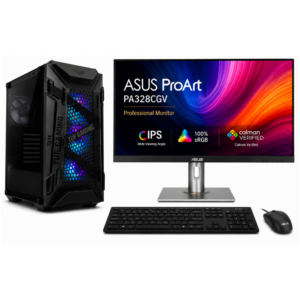
Choose an engineering desktop using the exact requirements of your CAD, simulation, rendering or analysis software. Compare the processor, memory, graphics card and driver certification, storage and display with the workloads you run; engineering applications vary widely in their hardware needs.
For more information, see the linked published guide. Confirm current models, pricing, stock and warranty with Richcom before ordering.
Should I prioritize CPU or GPU?
The balance depends on the application and task. Some CAD and simulation work is CPU-heavy, while 3D viewports and rendering may use a GPU. Check the software vendor’s recommended configuration and supported drivers.
How much RAM and storage should I plan for?
Large models, assemblies and datasets can need substantial memory and fast storage. Use the application’s requirements as a baseline and allow headroom for project files and other tools.
What details should I confirm in a quotation?
Confirm exact component models, memory capacity, graphics card, storage, display, operating system, software licensing and warranty. For professional applications, check the vendor’s compatibility list.
For advice based on your exact model and requirements, contact Richcom Technology or email [email protected].
Frequently asked questions
No. Requirements differ by application and task. Check the vendor’s recommendations and supported graphics hardware.
No single configuration is ideal for every workflow. Match hardware to the software, model size and simulation demands.
Use ECC only when the application and platform requirements justify it; confirm compatibility and vendor recommendations.
Compare the exact CPU, RAM, GPU, storage and software requirements, then consider warranty and upgrade options.